Pilates for Beginners: How Often Should You Practice?
If you’re searching for Pilates for beginners tips, the most common question is: how often should you practice? For most beginners, two to three sessions a week lets your body recover while building consistency. Too few sessions won’t build momentum, while too many can lead to fatigue. Here’s how to find the right balance as a Pilates beginner.
Why Frequency Matters More than Intensity at the Start
When you’re new to Pilates, your body is learning something it’s probably never done before: controlled, precise movement that engages deep stabilising muscles rather than the big, obvious muscle groups you might be used to training. This is different from lifting weights or running, where more effort usually means faster results.
With Pilates, consistency beats intensity. Two properly spaced sessions a week, done with good form, will get you further in six weeks than five rushed sessions where your technique starts to break down. Your nervous system needs repetition to “learn” the movements. Think of it as building a new motor skill, not just working a muscle.
The Ideal Beginner Schedule
For most beginners, here’s a simple framework that works well:
Weeks 1–4: Two sessions per week
This is enough to start building body awareness, learn the core exercises, and let your muscles adapt without overwhelming yourself. Space your classes out like Monday and Thursday, or Tuesday and Friday, so you have at least one full day of rest between sessions.
Weeks 5–8: Three sessions per week
Once the fundamental movements start to feel familiar (think the hundred, pelvic curls, basic reformer footwork if you’re doing apparatus Pilates), you can usually add a third session. By this stage your body has adjusted to the demands of the practice, and more frequent training will accelerate strength and mobility gains.
Beyond Week 8
Many people settle into a long-term rhythm of three to four sessions a week, mixing mat and apparatus-based classes depending on their goals and how their body is feeling. Some prefer two focused sessions a week and are happy with slower, steady progress — and that’s completely fine too. The “right” frequency ultimately depends on your goals, your schedule, and how your body responds.
How to Know You’re Doing the Right Amount
- You feel challenged but not depleted. Mild muscle soreness a day or two after class is normal. Constant fatigue, joint pain, or dreading your next session are signs to scale back.
- You’re recovering well between sessions. If you’re still sore heading into your next class, you may need an extra rest day.
- You’re seeing gradual improvement. Better balance, easier transitions between exercises, and improved posture are all signs your current frequency is working.
What Happens If You Do Too Much, Too Soon?
It’s tempting to want to move fast when you’re motivated and excited about a new routine. But going from zero to five classes a week can backfire. Overtraining as a beginner often leads to:
- Poor form as fatigue sets in, which increases injury risk
- Burnout or loss of motivation within the first few weeks
- Delayed muscle recovery, which can actually slow your progress
Pilates is designed to be sustainable. Joseph Pilates himself built the method around the idea of “contrology” — controlled, mindful movement — not high-volume, high-intensity training. Respecting that philosophy from day one will serve you far better than rushing the process.
Listening to Your Body as You Progress
As weeks go by, pay attention to how your body responds after each class. Some good questions to ask yourself:
- Am I recovering fully before my next session?
- Is my form staying consistent, or am I getting sloppy by the end of class?
- Am I excited to go back, or starting to dread it?
Your answers will tell you whether it’s time to add a session, hold steady, or dial things back. A good instructor can also help you calibrate — they’ll notice things about your movement and energy levels that are hard to see yourself.
Ready to Build Your Pilates Routine?
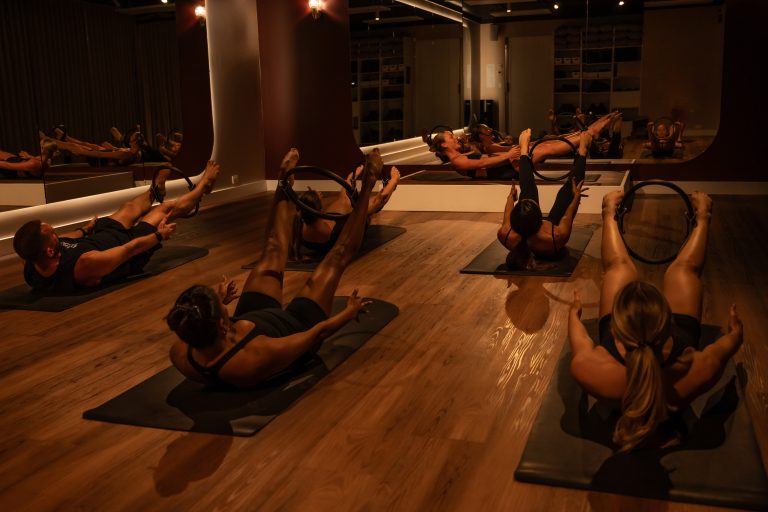
If you’re new to Pilates and looking for beginner advice, you might wonder how often to practice. At Pilates Locale, our qualified instructors specialize in teaching Pilates for beginners, guiding you through two to three sessions per week to help you progress safely and confidently. With expert support, you’ll build consistency, avoid burnout, and make the most of your Pilates journey from day one.
Ready to get started? Book your first class with us today and let’s build a Pilates routine that works for you, one session at a time.
Join the Pilates Locale Community
At Pilates Locale, we believe movement should feel both luxurious and empowering.
If you’re curious about Mat or Clinical Pilates in Brisbane, we invite you to explore our programs designed to support recovery, build strength, and nurture confidence.
Whether you’re returning from injury or seeking mindful movement, our studio is here to welcome you with care and community.